
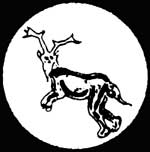
Sorcerer of Les Trois Freres
Sorcerer of Les Trois Freres
Paleolithic man was utterly dependant upon the animals he hunted. He regarded them as similar to himself, but endowed with supernatural powers. Early hunters often believed that the God or Ancestor of the animals he hunted must be sacrificed to, honored, and communicated with; hence, the Lords of the hunt were often personified, or conversely, the shaman/magicians of the tribe would become shape shifters, entering into the consciousness of the animal in order to commune with them and invoke their aid, powers, or to atone with them. Such may have been the Sorcerer figure found on the walls of an ancient initiation cave in France. To this day, Morris dances in which the male dancers wear horns on their heads are annually enacted in the Spring, embodying the fertile potency of the Stag king.
Couldn't load pickup availability
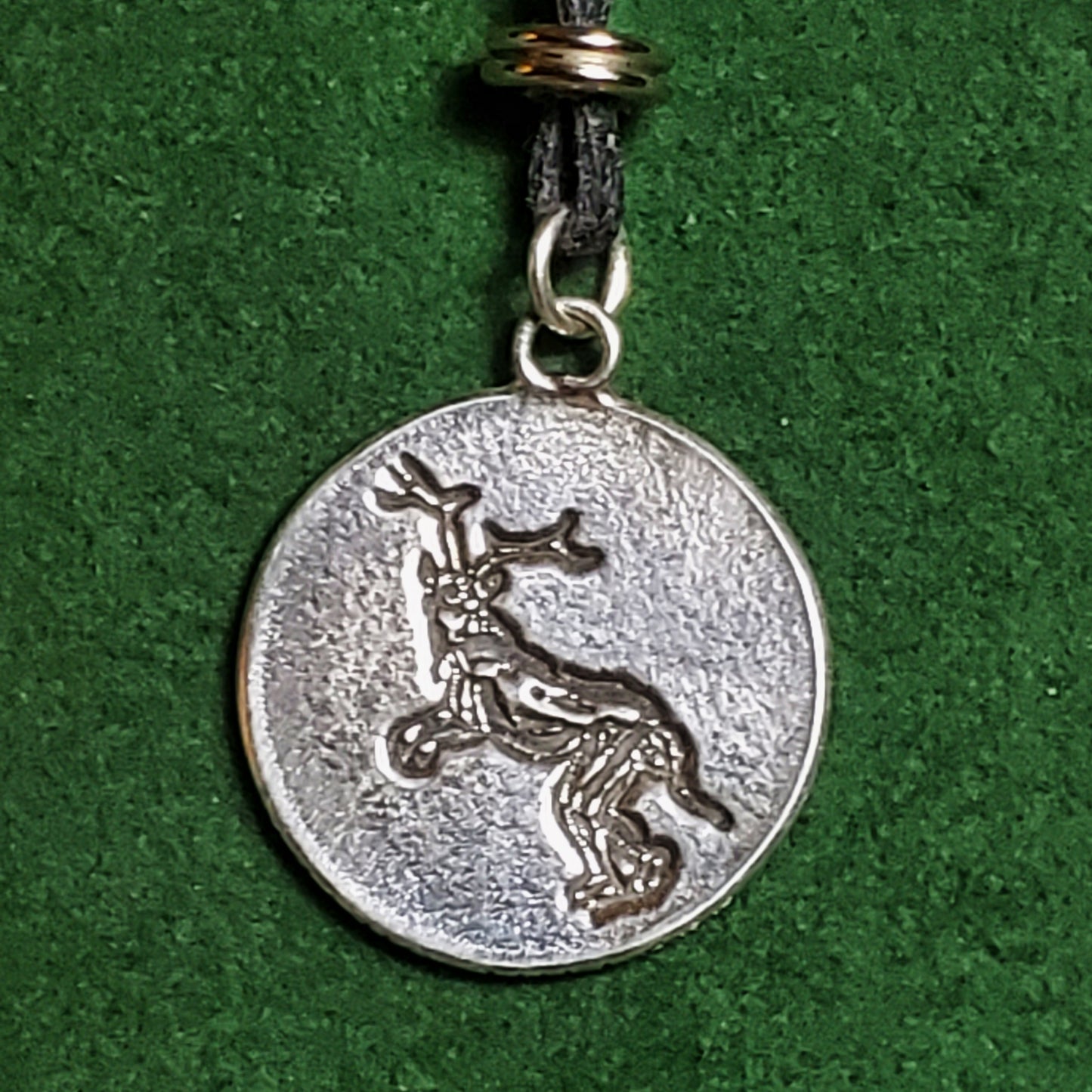

All medallions are 1" in diameter.
We also press 24K Gold (provided by the customer). Contact Us for recommended sources of gold and physical specifications of gold blanks.
We do patina and polish all medallions that we ship out. Please see product photos and our Instagram or Facebook for examples of the look. We understand that additional services are provided at the Fairs and Festivals, but we cannot facilitate those services.
Want to know more about the meaning of each of the symbols? Please check out the Learn More section! Or do you want more information about ordering at a fair or festival? Please see our Design Brochure.